Compliance
KYC, KYT and Risk Scoring: Building Compliance Into Your Banking Stack
Dmytro Medvid, Founder · · 6 min read
Key takeaways
- Treat compliance as part of the banking product, not a layer added after launch.
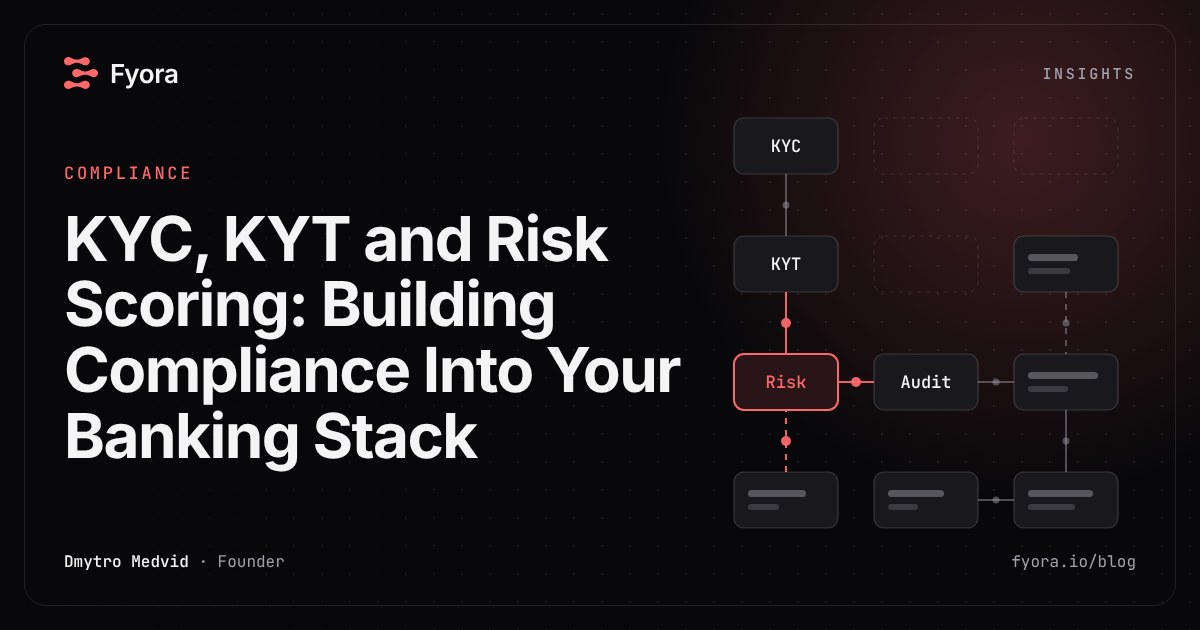
- Connect KYC, KYT and risk scoring so customer context drives monitoring and limits.
- Keep review decisions and activity in one complete audit trail.
Most compliance problems at young fintechs are not caused by bad intentions. They are caused by architecture. Onboarding lives in one tool, transaction monitoring in another, customer data in a spreadsheet and decisions in someone's inbox. When a regulator or a banking partner asks a simple question — why was this customer approved, and who reviewed this payment — the answer takes days to assemble.
The fix is to treat compliance as part of the product, not a layer added on top.
Three building blocks
KYC and KYB establish who your customer is. For individuals that means identity verification and screening; for companies it adds registration documents, directors and ultimate beneficial owners.
KYT — know your transaction — watches what customers do after onboarding. Rules flag activity that does not fit the customer's profile, involves high-risk counterparties or matches known patterns of financial crime.
Risk scoring connects the two. Every customer gets a risk level based on who they are and how they behave, and that level decides how much scrutiny they receive: how often their profile is reviewed, which transactions trigger alerts, what limits apply.
Why these belong inside the platform
When the three blocks are separate tools, your team becomes the integration layer. Analysts copy data between systems, risk levels go stale, and the audit trail is spread across several vendors.
When they live inside the banking platform:
- A change in risk level immediately changes limits and monitoring rules.
- An alert opens with the full customer context — profile, documents, accounts and history — on one screen.
- Every decision is logged in the same audit trail as the activity it relates to.
- Reporting comes from one source of truth instead of reconciled exports.
What a compliance-ready back office includes
- A single customer view: identity, documents, risk level, accounts and transactions together.
- Review queues for onboarding cases and monitoring alerts, with assignment, escalation and notes.
- Configurable rules and thresholds, so your compliance officer can adapt monitoring without a development sprint.
- Roles and permissions that separate duties between operations, compliance and management.
- A complete audit log that answers who did what and when, for every action.
Choose providers, don't marry them
Verification and monitoring providers differ by market, price and coverage, and the best choice today may not be the best choice next year. A well-designed platform treats them as interchangeable integrations: you connect the providers your risk assessment requires and replace them without rebuilding your stack.
Built by people who have been on the other side
Fyora's back office was shaped by founders with a regtech background — people who built KYC products for regulated companies and saw first-hand what compliance teams struggle with. Onboarding checks, risk scoring and the audit trail are part of the platform, and providers for KYC, KYT, cards and crypto connect through the Integrations Hub.
If your compliance today lives in five tools and a spreadsheet, that is the place to start.
FAQ
Why integrate compliance?
To keep customer context, monitoring decisions and audit records together.
Should providers be replaceable?
Yes. Provider coverage, pricing and market requirements change.